The Streal blog
How languages are actually learned from real speech: what the research says, what levels mean, and how to turn what you watch into an ordered course.
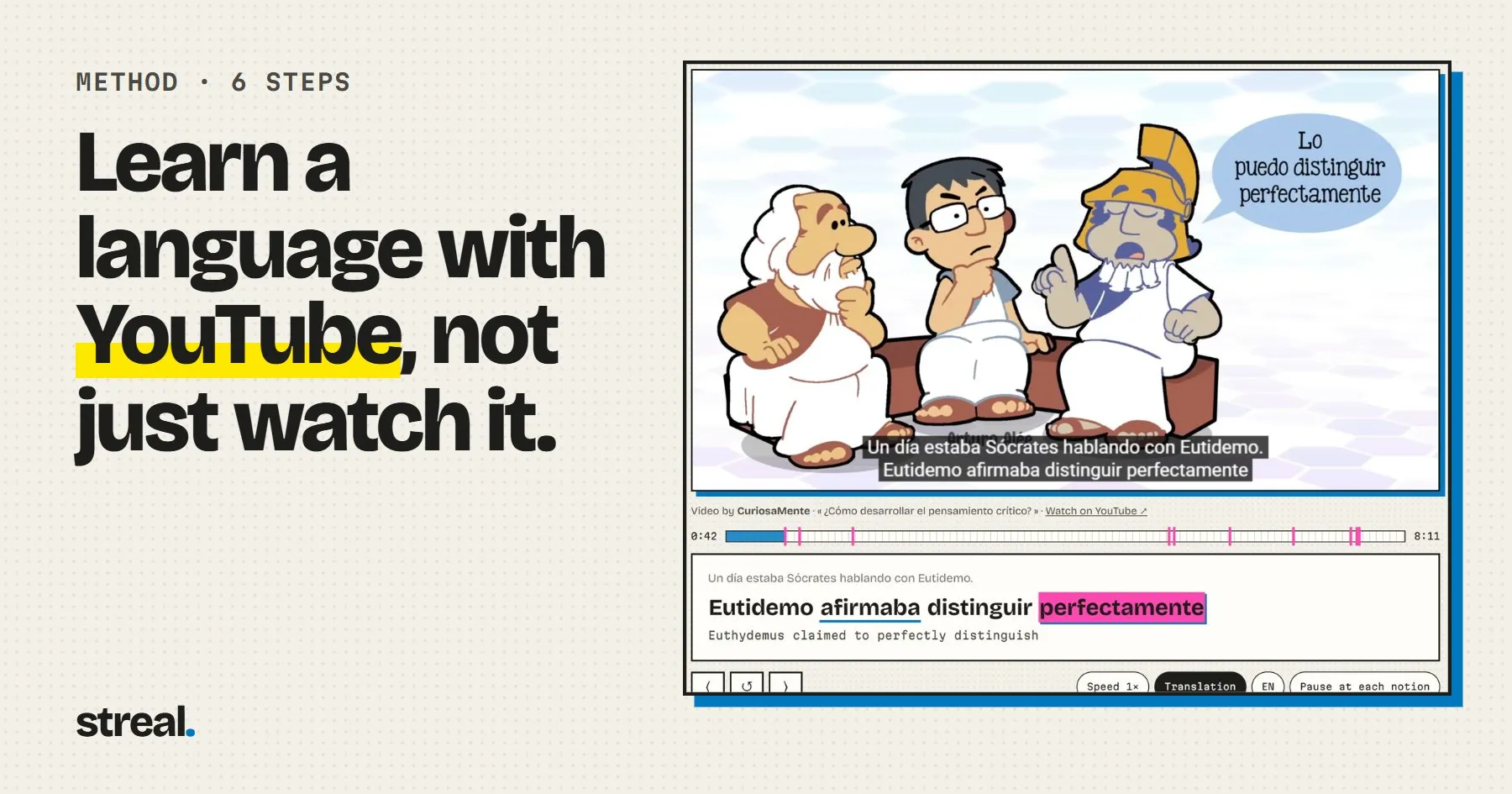
How to Learn a Language With YouTube
YouTube has endless native speech and no idea what your level is. A six-step method, with real numbers on speed, vocabulary and subtitles.
Spanish Grammar, Heard in Real Videos
Twenty grammar points from ser vs estar to the subjunctive, each explained simply and then heard in clips of native speakers.
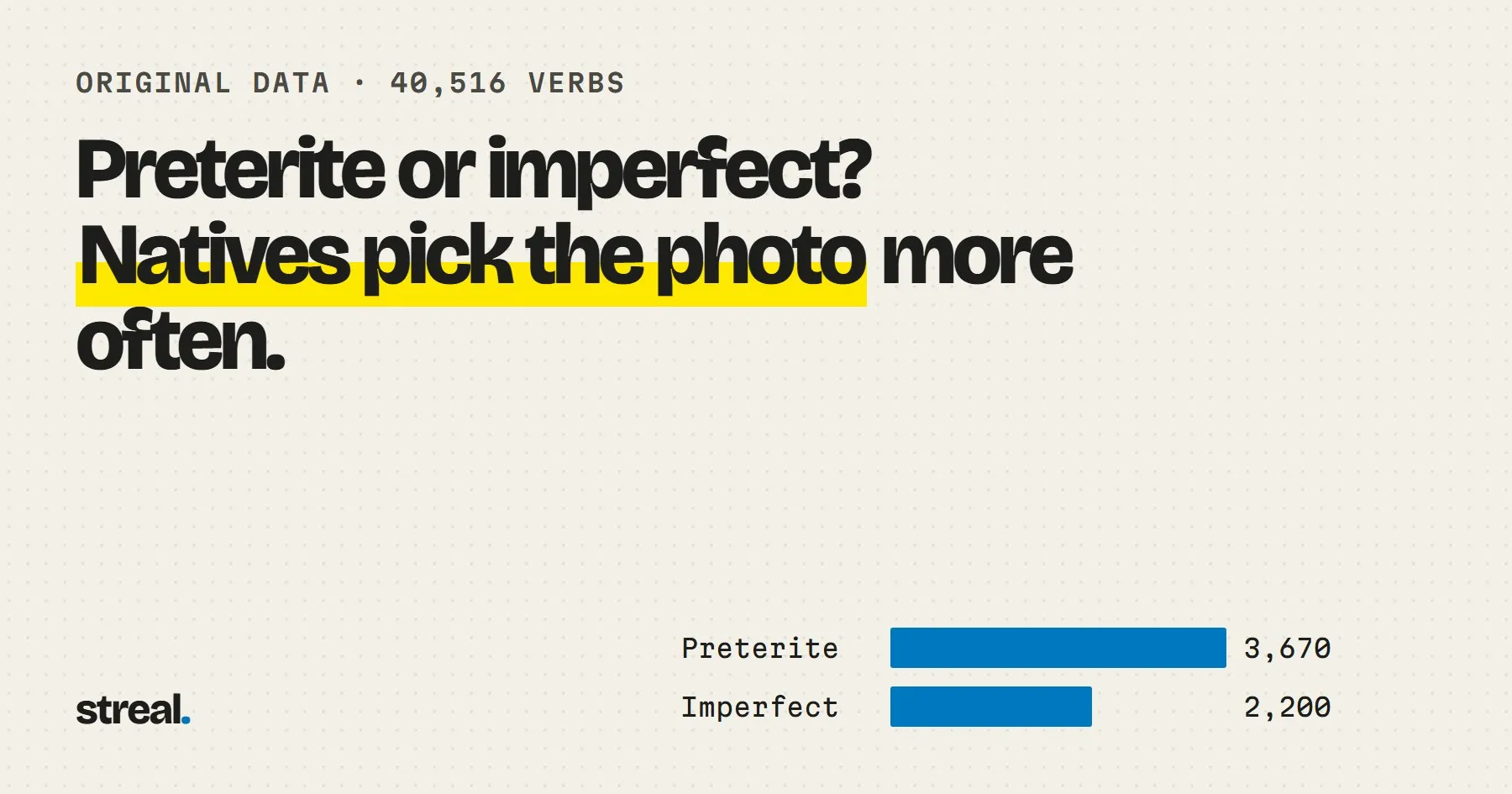
Preterite vs Imperfect: How Natives Actually Choose
The rule that works, the shortcut that does not, and 5,870 past-tense verbs from native YouTube videos to check it against.
The Best Dreaming Spanish Alternatives
Dreaming Spanish is a great library of input. What to use alongside it, or instead, when you want grammar, an order or speaking practice.
The Best FluentU Alternatives for Learning From Real Videos
Lingopie, Yabla, Language Reactor and others compared on price, content and method, so you can learn from video without $30 a month.
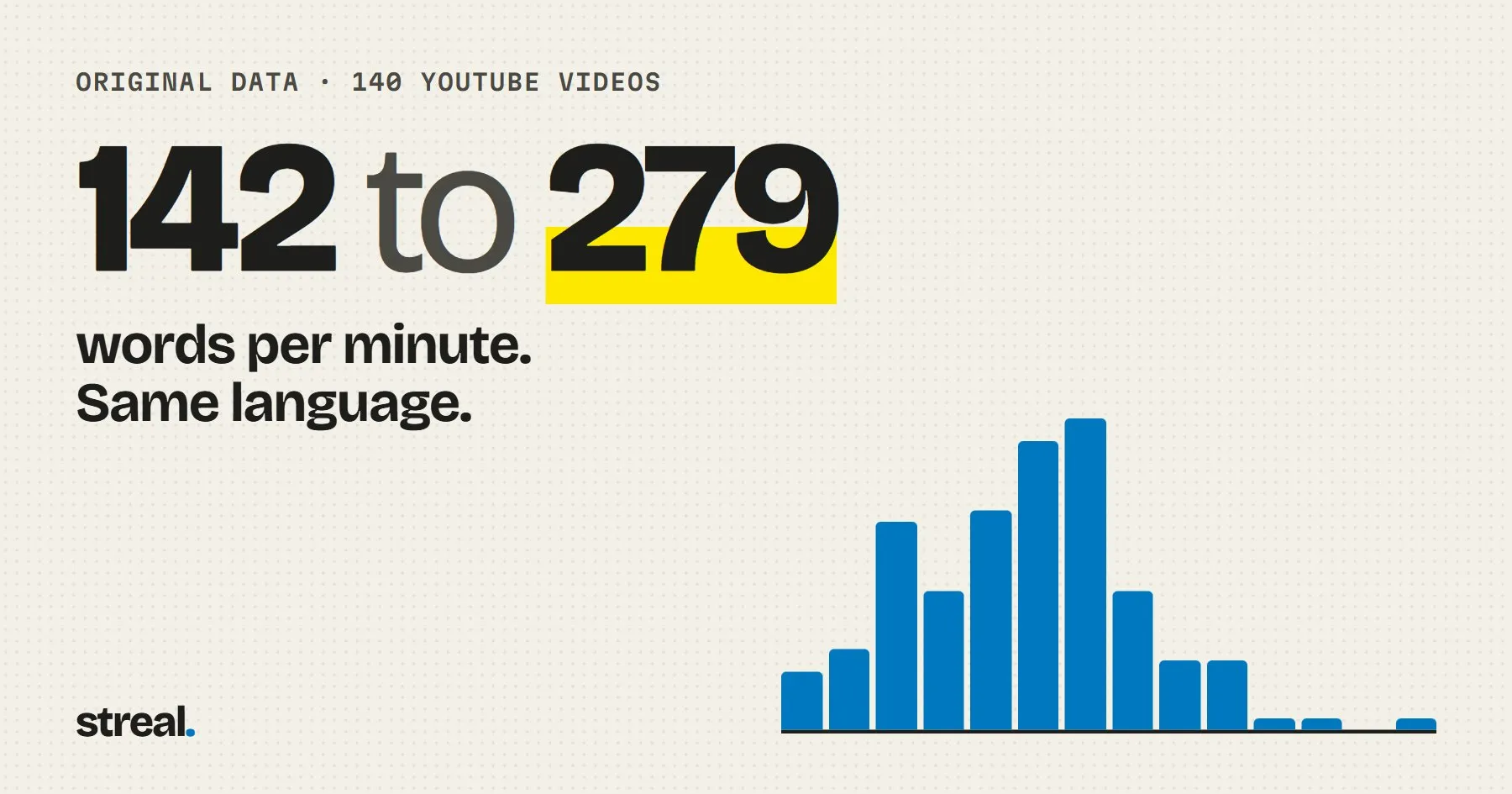
How Fast Do Spanish Speakers Talk? We Measured 140 Videos
About the same words per minute as English, but 30% more syllables, and a gap of nearly double between speakers.
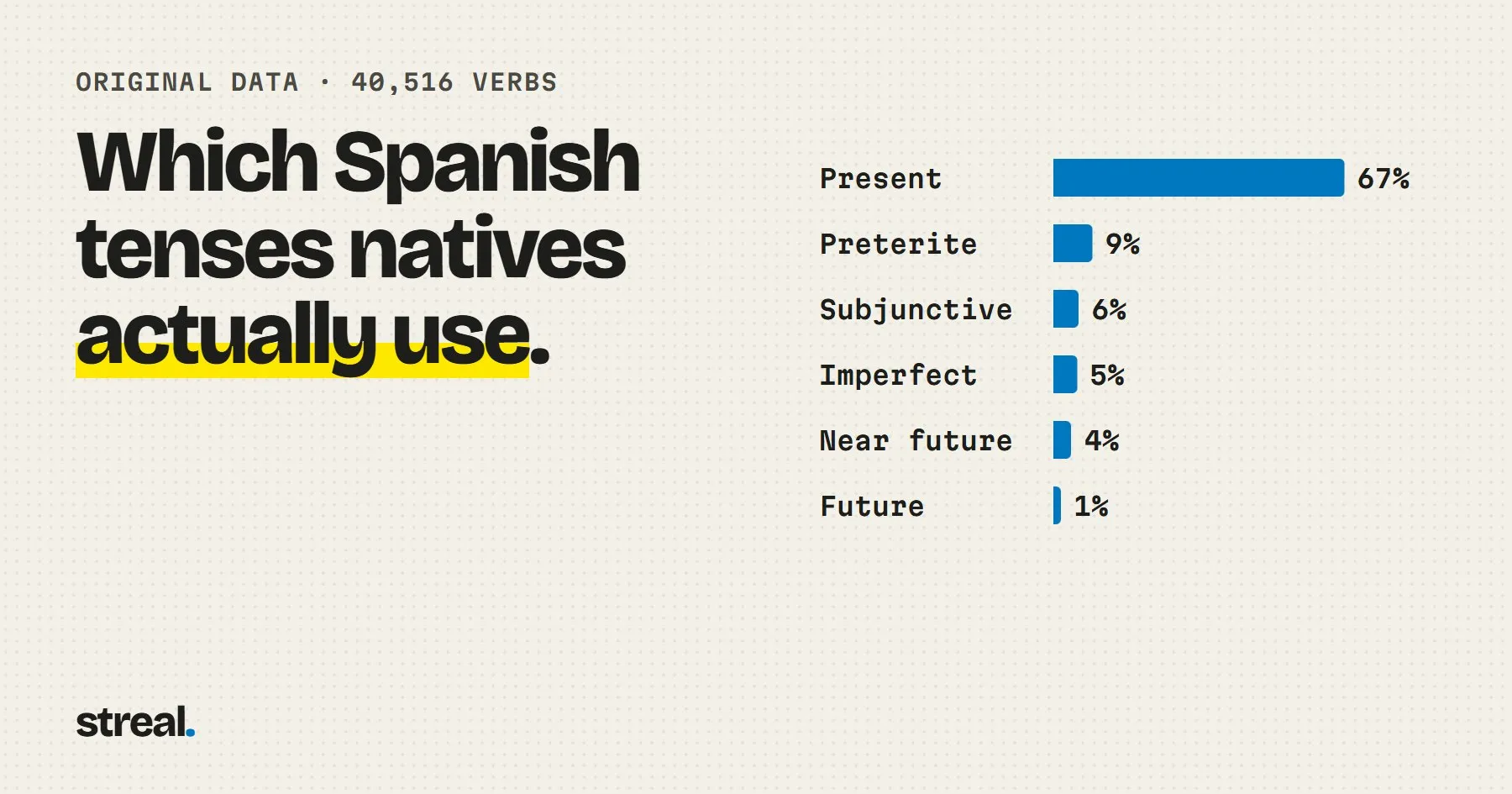
Which Spanish Tenses Do Natives Actually Use? We Counted 40,000 Verbs
Two thirds present, a subjunctive about once a minute, and five verbs that make up 45% of everything.
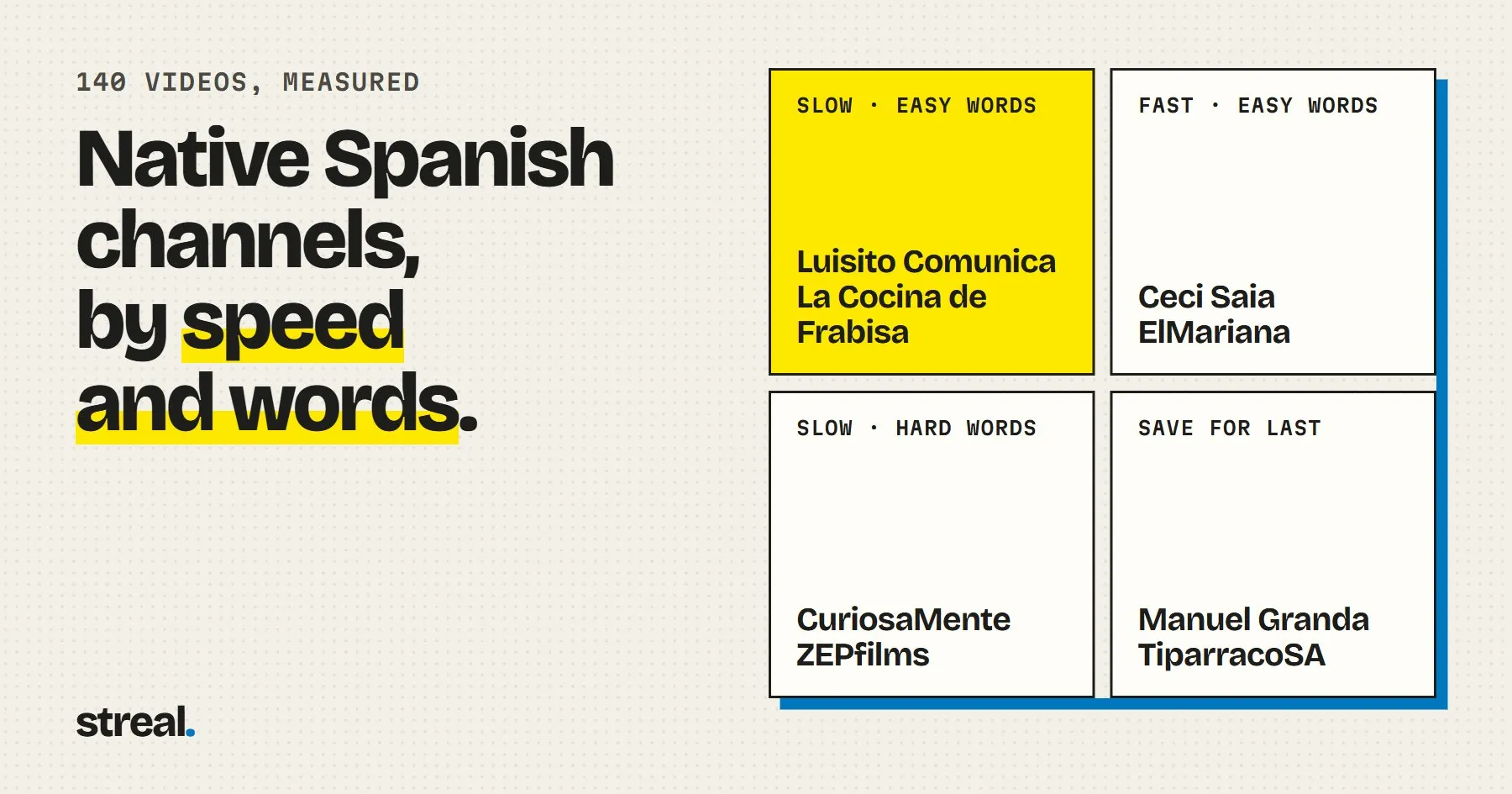
The Best Native Spanish YouTube Channels, by Speed and Vocabulary
Lists sort channels by feel. We measured 140 videos on both, and the slowest speakers often use the hardest words.
Why You Still Can’t Understand Native Speakers
Three separate reasons native speech stays unintelligible after years of study, and the loop that fixes all three.
What to Do After Duolingo
What a finished tree did and did not give you, and the next block of work that actually moves you to B1.
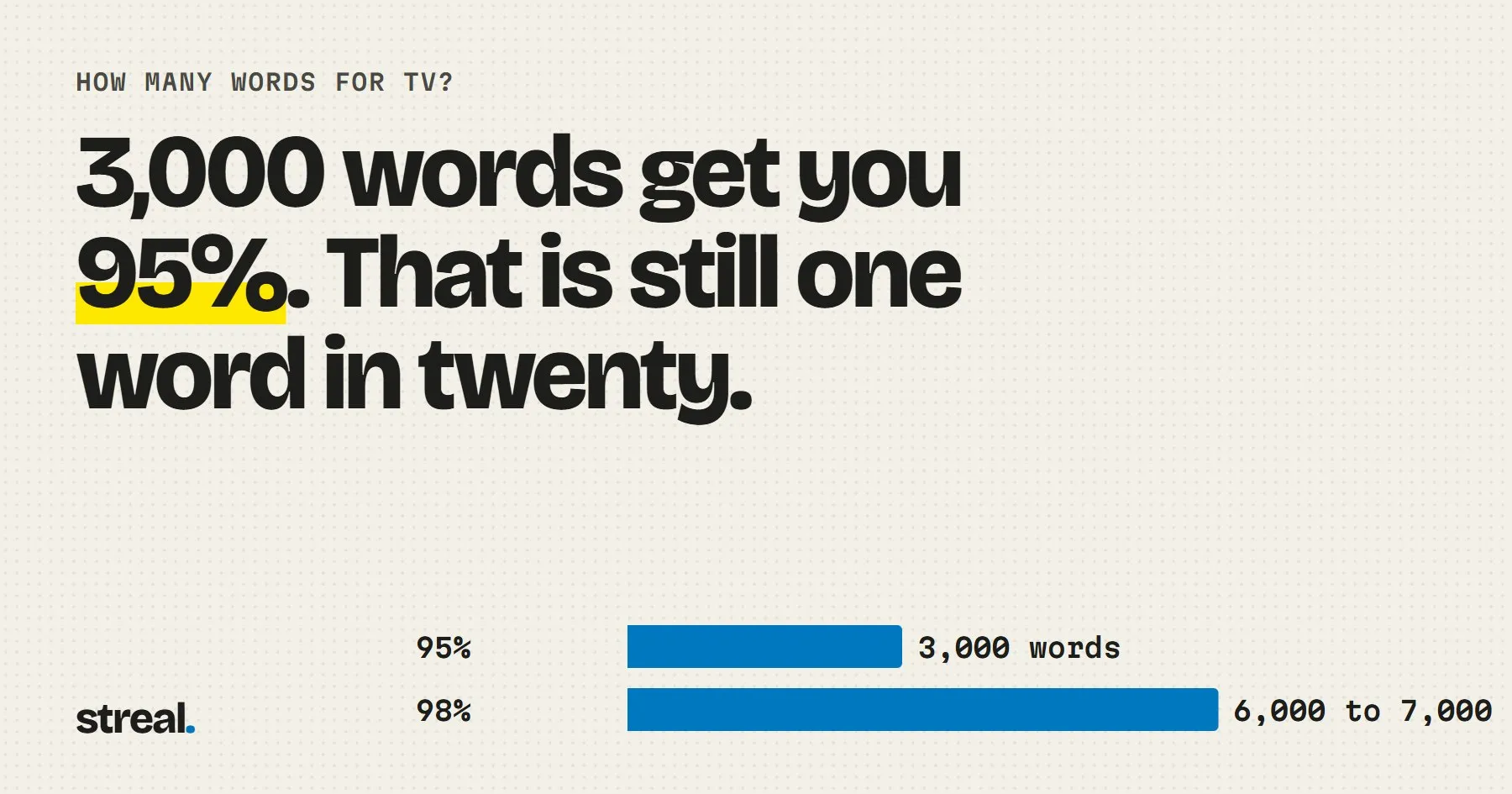
How Many Words Do You Need to Watch Without Subtitles?
The research puts a number on it, our count on YouTube agrees, and 95% coverage is far less comfortable than it sounds.
CEFR Levels Explained: A1 to C2, and How to Tell Which One You Are
What each level lets you actually do, the honest self-check for each, and why B1 to B2 is the long one.
An A1 to B2 Study Plan That Pairs a Course With Real Speech
How much of your week goes to ordered lessons, how much to real input, and how the ratio changes by level.
Why Immersion Alone Doesn’t Work at A1 and A2
Comprehensible input is real, but native video is not comprehensible to a beginner. What to do instead.